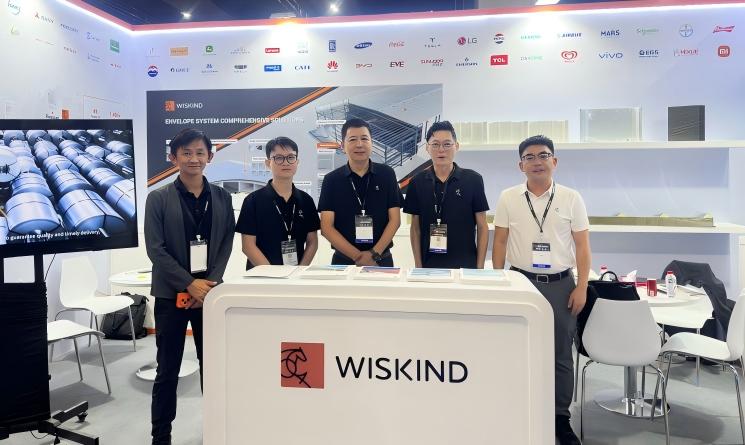
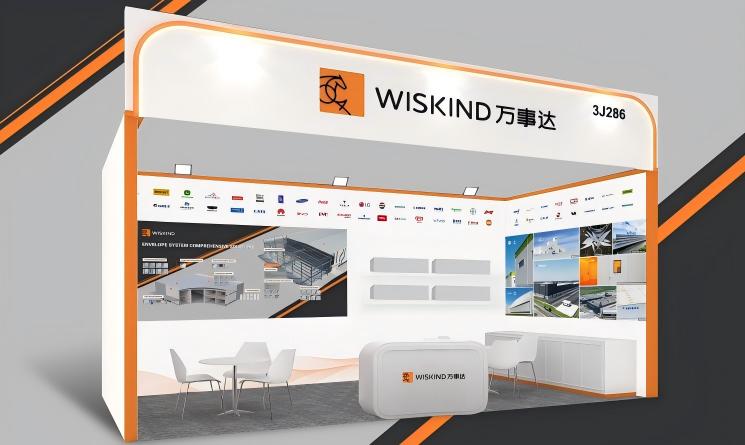
You can tell a company's business philosophy from its factory.
When a customer walks into a factory, what they see isn’t just the efficiency of the production line, but also the company's basic attitude towards people, nature, and the future. Buildings can speak, and they are more honest than any promotional material.
For a long time, industrial buildings have been seen as the 'supporting role' of manufacturing: as long as they're big enough, sturdy enough, and usable, that's enough. Behind this view is an implicit logic: buildings are a cost, not an asset. But this logic is starting to break down.
In today's manufacturing world, where competition extends to talent, branding, and sustainability, you can't judge a factory just by whether it gets the job done. Industrial buildings are going through a fundamental shift — they're moving from being just containers for production to becoming engines that drive long-term business value.
Wiskind’s take on this shift comes from nearly 50 years of hands-on experience in this industry. We've not only been honored as a China national-level specialized and innovative 'little giant' enterprise, a national high-tech company, and a green factory, but we've also maintained a leading position in the industry, serving many well-known companies at home and abroad, sticking to consistent quality standards for all our customers. This experience also gives us the confidence to rethink what industrial buildings should be.
Human-centric: Industrial Buildings Should Be Spaces for People, First and Foremost
The end game of competition in manufacturing is really all about talent.
However, for a long time, our imagination of manufacturing spaces stopped here: machines running, pathways clear, and roofs not leaking. Day after day, employees were stuck in these closed, noisy 'tin boxes,' feeling tired and disconnected.
It's not just about comfort — it directly affects productivity, employee retention, and even a company's ability to attract young talent. When a factory can't make its workers feel respected, it's hard to win in the talent war.
Truly human-centric industrial design starts by putting employees' feelings at the heart of the space. Plenty of natural light, proper ventilation, high-quality break areas, dining spaces, and lounges, along with systematic measures for occupational health. These investments are essentially about respecting employees' dignity. Wiskind has a simple rule: making sure employees work happily and live well is the foundation for all business efficiency decisions, and it’s also the most direct way to put the value of ‘achieving mutual success through sincerity and integrity’ into practice.
More importantly, this kind of investment brings direct business returns. When customers visit the factory, the genuine confidence and ease on the employees’ faces is persuasive evidence that no marketing material can replace. A factory where employees are truly satisfied is, in itself, the best endorsement for the brand.
Brand and Aesthetics: Industrial Buildings as the Business Card of a Company
In manufacturing, aesthetics are becoming a core competency. From product design to factory layout, from building facades to shop-floor workflows, aesthetic judgment permeates every link in the manufacturing company's value chain. A company that pursues aesthetics often has the same obsession with product quality — this cross-scenario empathy is the strongest sign of trust that factory buildings can convey to customers.
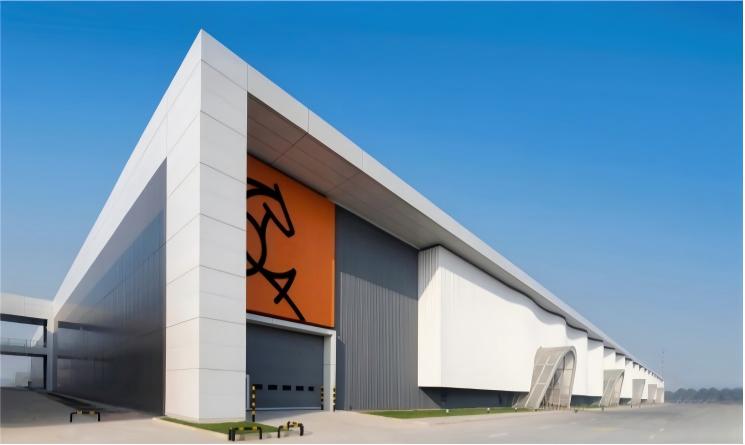
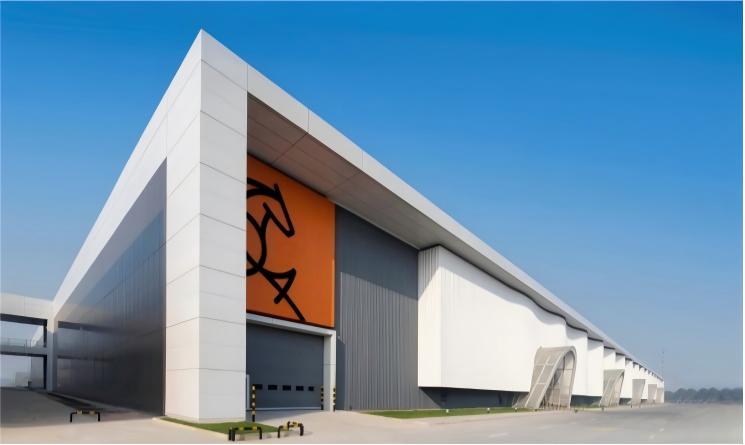
The Wiskind Jiangsu manufacturing base is a vivid example. Covering 100,000 square meters of land, this factory breaks away from the traditional matchbox-like image of building material manufacturers. The east facade of the factory building stretches nearly 350 meters in curves and surfaces, rippling like water, perfectly reflecting the features of the water towns in Southeast China. The west facade showcases a dreamy gradient of Morandi blues and purples, blending seamlessly into the skyline. This obsession with aesthetics is a physical manifestation of Wiskind’s corporate values, making the factory a landmark in Zhenjiang economic development district that doesn’t even need a street post sign.
Going a step further, when a factory's aesthetic level exceeds the expectations of its surroundings, it can become a regional landmark. In Zhenjiang Economic Development District, even though many residents might not be able to accurately say the name of Wiskind, they are very familiar with the factory that has an iconic streamlined design and exterior walls with beautifully changing colors. This kind of landmark recognition beyond just the brand name not only boosts the pride of employees but also makes the factory a dazzling industrial calling card.
Green Symbiosis: Being Part of the City, Not an Isolated Island
Future industrial buildings shouldn't be isolated islands in the city.
Inclusion is part of Wiskind’s core values, which means industrial buildings need to live in harmony with the Earth's ecosystem and become part of the city, rather than standing alone like an island. With photovoltaic technology and smart energy management, factories can shift from being energy consumers to producers of clean energy. Wiskind’s photovoltaic roof integration solution combines PV modules with roofing systems, effectively boosting power generation efficiency and providing a clear technological path for industrial roofs to move from energy saving to energy producing, bringing tangible operational benefits.
Planning ahead in terms of location choice, noise reduction, and landscape integration is a way for companies to show goodwill to the surrounding community. From the very beginning of planning the Jiangsu manufacturing base in Zhenjiang, Wiskind paid great attention to the design of the street-facing façade, and today it has become a benchmark for environmental improvement in the development zone. This kind of upfront investment, when viewed from a full life-cycle perspective, can help companies avoid a lot of potential disputes and also build real trust with the community and recognition from the government. A factory that can coexist harmoniously with the city is truly an asset with long-term vitality.
With the growing pressure of global carbon tariffs, a factory's low-carbon performance is no longer just a bonus — it has become one of the thresholds for entering the international market. The low-carbon transformation of manufacturing often focuses on process innovation and energy substitution, but the industrial buildings that support these changes also hold significant carbon reduction potential. How can industrial buildings shift from being energy consumers to energy producers, and from cost centers to carbon-cutting assets? Looking ahead, low-carbon construction will be a necessary path for industrial companies to build long-term competitiveness.
Technology Empowerment: Smart Buildings Are the Competitive Edge of a Company
Different industries have completely different needs when it comes to industrial buildings. Industrial buildings aren't standardized products — they have to precisely fit the characteristics of each industry. From the large, column-free spaces needed for heavy machinery, to multi-storey standard factories ideal for electronics assembly, to the extreme vibration control required for chip manufacturing, each industry trait calls for a tailored architectural solution. For example, a large 3D CNC drilling machine factory built its large plant directly into solid rock several meters underground to ensure a production environment with constant temperature, humidity, and zero vibration for high-precision machines. Wiskind’s building solutions first and foremost understand production. We know that only by tailoring physical spaces to production processes can we lay a solid foundation for future smart development.
In today's world where digital technology is everywhere, the level of intelligence in industrial buildings is becoming a key factor affecting how efficiently companies operate. Wiskind Jiangsu manufacturing base is working closely with Siemens to break down the equipment silos in traditional production workshops, enabling connectivity between devices and digital management of production processes. BIM (Building Information Modeling) technology runs through the entire life cycle from design and construction to operation, ensuring a high level of unity between digital and physical spaces. Integrating IoT sensors gives buildings perception abilities, making predictive maintenance for equipment and precise energy management a part of everyday operations.
Digital twin technology maps the entire factory into a virtual space, allowing simulations before construction and continuous optimization during operation. This makes the factory no longer just a static asset, but a living organism that can self-learn and evolve dynamically.
Facing the ever-accelerating technology updates in manufacturing, industrial buildings also need to be pretty flexible. Think big column-free spaces, modular designs, and plenty of room for power, network, and piping connections. That way, when business shifts, the factory can quickly adapt instead of holding back the company's transformation. Planning a bit ahead with space is the best way to cut down on future renovation costs.
Today, Wiskind has expanded its businesses beyond the Asia-Pacific region, offering products and services across five main areas: steel building structure systems, metal envelope solutions, cleanroom enclosure systems, cold storage enclosure systems, and building decoration and shading systems. This building system integration capability is exactly what gives Wiskind the confidence to provide customers with tailored, comprehensive building solutions.
When a Factory Carries More Than Just Production
From production containers to value engines, the evolution of industrial buildings reflects the deep shift of manufacturing from rough expansion to refined innovation.
It's no longer just a factory building; it reflects the company's attitude toward people, its responsibility to nature, and its vision for the future. All of this shows up in every little detail of the building.
Wiskind started in 1978 from a small tin house in Xingfu Town, Bo-Xing County, Shandong Province in China. Sticking to the core values of achieving mutual success through sincerity and integrity, and with the mission of creating lasting beauty in buildings and life, we aim to become a respected company and grow sustainably.
Looking back from the point of 2026, what changes in manufacturing are the technology, materials, and standards, but what stays the same is the respect for space and the commitment to long-term value. When a factory starts to understand people, nature, and the future, it becomes the most reliable engine for a manufacturing company to get through cycles.



Sweep Code Concern
Click: Here-
Join us

Copyright © Wiskind Architectural Steel. All Rights Reserved Lu ICP prepared 11034856



QR Code



Applet


Sweep Code Concern
Click: Here-
Join us